So here is the new grammar for unit 7: The reported speech.
Please take a thorough look at the instructional videos and make sure that you understand, first of all, the basic concept of what direct and reported (indirect) speech are and how to change from one to the other. This first poster deals with modifying tenses when changing from direct to indirect speech (but make sure you understand when NOT to change them!):
*** The reason why some tenses (past perfect) or modals (should) have not been included in this chart is that they do not change.
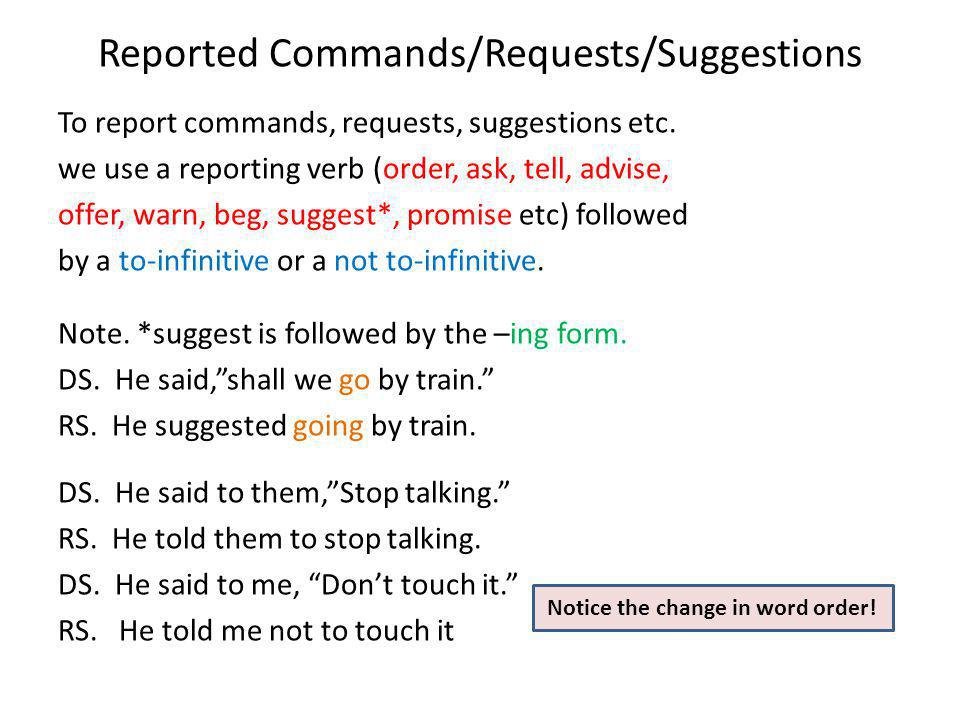
One important thing you need to keep in mind is that requests, commands and invitations will change in a different way... check it out in the videos. I am leaving here a brief visual support.
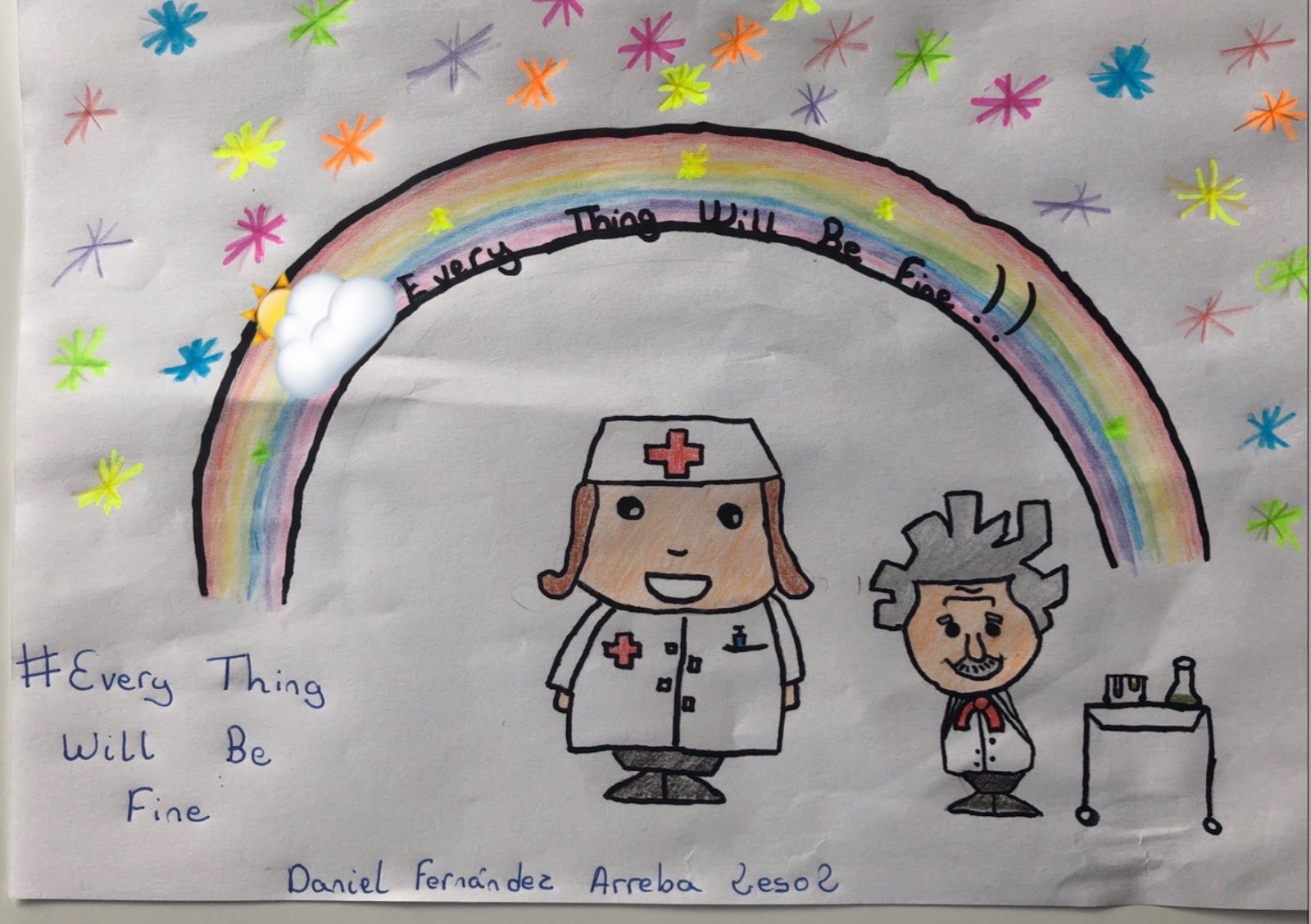
Nope! I have not forgotten about challenges. It is just that you are not being too motivated about them... whatever! But... there is always a beam of sunlight among the clouds! One of you decided to participate and create an artwork for the challenge! 🎨
I am too sorry I didn't upload it earlier, but still... it is sooo worth it! Let's see who can guess the student and the artwork! IT IS ONE OF YOU! THANK YOU Mr. Incognito, I LOOOVE IT!
I´d like to tell you that I didn't upload any other challenge because you weren't following along... but my toughness disappeared again when I watched this.
CHALLENGE 3: SOMETHING THAT WILL MOVE YOU! (by ¨move¨ I mean something that will give you chills!) Share with us a video that has really really inspired you (IN ENGLISH!) ☺️
My video comes from an actor I really admire: Hugh Jackman. When he was filming the movie ¨THE GREATEST SHOWMAN¨, he had to go through surgery because they found skin cancer on his nose. The doctor told him that he couldn't sing at all when he went back to rehearsals, but when he was rehearsing the last number, he just couldn't help himself and this is what happened. I HOPE YOU ENJOY IT!
Here is a new CHALLENGE. I created my own version of an artwork and took a picture. I challenge you to create your won version of a FAMOUS artwork and send it to me. You can also share it in the comments below, but if you do so, please do not forget to blur your face as this is a public domain.
Just for your information... I was about to abandon the idea of the challenges, but suddenly this came to my inbox! Thanks, Daniel Fernández Arreba, you rock!
You still have some time to create your #everythingwillbefine craft.
By the way... do you remember this project from last year? #YOURENGLISHTEACHERCHALLENGE will be all about this. Write a new entry in a bit, keep posted!
So, yes, it´s a WEEKDAY and even when it is not a regular one, it´s time to get busy!
In this video I am including the following information:
A. RECOMMENDATIONS FOR THESE INTERESTING DAYS:
A.1. ROUTINES: create a weekday schedule or timetable to follow on weekdays and be responsible about it.
A.2. TO-DO LIST: remember those ideas about projects that you want to do but never have time for? Hmmm... it might be a perfect timing now! Listen carefully to that English song you always wanted to understand, read that athlete post that looked so interesting...
A.3. CALL SOMEONE: Calling means speaking, not texting... hear someone's voice or connect via videocall if you have the chance, even better!
A.4. MOVE: why don't you create your own indoor training track? Visit some online tutorials: yoga, pilates, zumba... you name it, there are tons online!
A.5. BE CREATIVE: Take out your color pencils or watercolor, play an instrument, create some crafts or your own board game!
B. YOUR ENGLISH TEACHER CHALLENGE 1:
Hah! Do you wanna win the GOLD PRIDE CHARM? Get on your creativity skills and try to win the contest... CHALLENGE 1 IS HERE!
Using the hashtag #everythingwillbefine , create a hanging craft/poster to show your neighbors from some of your windows. Send your picture to me or add it to the comments of this post. Look at the awesome example down here. In a couple of days I will upload a new YOURENGLISHTEACHERCHALLENGE!
The passive voice is one of those structures that really makes a difference. Why? Well, it is used quite often, more than we use it in our native language.
For this unit´s notes, you must add at least one question at the end of your paper.
Let´s start! Here is a visual aid to better understand the passive:
If you´d like to compare active verb tenses with passive ones, here´s another helpful pic. You could print out this REALLY HELPFUL board (or check a very similar board in your workbooks).
Finally and before jumping into the ¨flipped classroom¨ videos, I´d like to introduce you to a special passive form: THE CAUSATIVE. This grammatical structure is broader than what we are going to learn in this unit, that is why I had to take the material right from our class book (although I always encourage you to go a step further! -find more info online if you'd like to ;D-):
BASIC MATERIAL:
CHALLENGE MATERIAL:
Passive (general explanation)
The causative form with let, make, have, get, help.
Today we are introducing Conditional sentences. As you have seen, I always like to start by offering you a ¨visual aid¨ with grammar basics. There are four types of conditional sentences (conditional ZERO is missing in this image, but remember! clause 1 - present simple + clause 2 - present simple). FOR NEXT WEEK, YOU WILL HAVE TO TURN IN A PAPER ABOUT CONDITIONALS AND THEIR USE. Include structure and uses. IMPORTANT: At the end of your notes, you MUST include one or two questions of something that is not clear enough or that presents some difficulties.
Hey, this seems pretty familiar, right!? You've learnt about Modals your whole secondary life... but this time we are going a step beyond. These verbs are called modals because they express modality; this is, they ADD MEANINGto another verb: obligation, permission, possibility and ability.
For the notes that you must turn in next week, don´t forget to add both MODALS and MODAL PERFECTS along with their use. Thanks!
Before I go on with the grammar lesson, I´d like to give you a set of GOLDEN RULES to avoid those recurring mistakes when using modal verbs:
BASIC GOLDEN RULES TO USE MODAL VERBS
- Modal verbs NEVER add an ´s´ in the 3rd person singular: She MUSTS wear a dress for the party. - They don´t need auxiliaries to make negative sentences or questions: Can we go with you? / You shouldn´t get so close to the edge. - We use an infinitive WITHOUT ´to´ after modal verbs (except with ´ought TO´): They must TO arrive early / Could we TO go to the cinema tonight?
Below you can find a couple of charts that will help those ´visual´ learners. Don´t forget to identify the ´uses´ in each chart, as they explain when you will need them.
SIMPLE MODALS
PERFECT MODALS
(they refer to past situations)
As always, I am also enclosing a couple of videos for you to digest grammar and come to class next day with your notes to start practicing and understanding by doing.
BASIC MATERIAL:
Simple Modals
Perfect Modals
CHALLENGE MATERIAL
This video is a very nice summary of modal verbs and their perfect forms. If you don´t remember modal verbs from previous years and you first need to review them, you might have to watch the `basic material` videos first.
And another clarifying video from BBC Learning English:
Moving on! We are writing a ¨check¨ next to the box of VERB TENSES and visiting a new challenge.
The new GR topic is defining and non-defining clauses. Before we go deeper, I´d like you to recall relative pronouns from previous years:
In your notes, you have to include information about:
- Relative pronouns.
- Relative clauses: differences between defining and non-defining WITH EXAMPLES and when we use each of them.
Now, take a look at this summary chart. Before you read, keep in mind that this grammar chunk deals with ¨oraciones subordinadas¨, as we call them in Spanish. You will find here the most important details about both defining and non-defining clauses. Then, do not forget to choose a video to watch step-by-step explanations!
BASIC MATERIAL
In order to learn about relative clauses it is essential to review relative pronouns, as we did at the beginning of this post. This video will first introduce relative pronouns, take a look! The content you need to watch starts at minute 6:52 from this video.
CHALLENGE MATERIAL
Take a look at this podcast from BBC English, it is very clear and it also gives you some examples to practice!
First of all: as you navigate on this new chapter, PLEASE DON´T FORGET TO KEEP PRACTICING AND REVIEWING unit 1.
Here, you will be able to learn about compound future tenses: future perfect and future continuous.
As always, there is an explanatory video, more challenging and with some extra information for you to widen your knowledge and then, other material for those students who need to strengthen their skills from the basis.
Please, watch the videos and take down notes. When you come to class, we will be working on exercises about this grammar topic. DON´T FORGET TO GIVE ME YOUR NOTES ON TIME!
Here is a brief explanatory poster:
CHALLENGE MATERIAL
BASIC MATERIAL
I am including one of the videos from last grammar post because they are quite clear. The explanations about Future perfect simple and Future continuous are at the end of the video (from minute 5:00 to minute 5:50).
Here you can find the Writing Skills presentations to help you cope with writing basics. Remember that these rules are not ¨set in stone¨, but they will help you create a well structured essay.
SLIDE 1: Word order in a sentence.
SLIDE 2: Subject and verb agreement.
SLIDE 3: Adjective order.
SLIDE 4: Linkers, classified by language function.
Dear students, This might be your first experience ¨flipping¨ the way you learn English. Remember that your usual homework would take you some time. Watching a video and taking notes from it does take time as well. Use as many views as you need to understand this lesson: if it´s too easy, you can fast forward to find the next step. If, on the other hand, it is too difficult, you can always go back and watch the explanation again. Unit 1 is about present, past and future VERB TENSES. It is a REVIEW unit, which means that you should have already learnt most of these contents during your ESO years. Remember to find your code (challenge or basic) to start reviewing! Don´t get overwhelmed about the contents of this post! I am just adding as much material as possible but, as explained above, it is a REVIEW, so you can skip the contents that you already know. In the PAPER that you must turn in, you must add notes about the following tenses (and how to use them, of course!): - PRESENT TENSES (simple and continuous). - PAST TENSES (past simple, past continuous, present perfect simple, present perfect continuous, past perfect) - FUTURE SIMPLE. - ¨BE GOING TO¨ Here is a brief poster about VERB TENSES in English. It can be very practical when learning about when we use each tense:
CHALLENGE MATERIAL Comparison of all verb tenses. Explanation in English.
BASIC MATERIAL
Present Tenses: Presente Continuo vs. Presente Simple
Past Tenses: Pasado Simple y Pasado Continuo
** Los contenidos importantes son hasta el minuto 4:27. El resto del vídeo os puede ser de gran ayuda a aquellos que tenéis dificultades para recordar los verbos irregulares.
Past Tenses: Presente Perfecto y Presente Perfecto Continuo
... to our class´ blog. Welcome to a new school year and to OUR English lessons. By now Mr Diaz will have probably told you about this blog and how to use it. Here are some indications about this blog´s contents: - Flipped classroom videos and resources: grammar support that you can visit as often as you need to reflect on what we are working on in the classroom. It will include videos, posters and/or other visual connections. - This material will be graded: You will either find CHALLENGE or BASIC support material. Challenge material will usually include flipped content with explanations in English and Basic material will show explanations in Spanish for those students who are looking for a deeper clarification. - Blog entries will show a code: In case you get easily lost, find a code in the title! If you are looking for 1st of Bachillerato content, check the beginning of the blog entries: for example, if you are looking for VERB TENSE REVIEW, the title of the entry will be something like: ¨1stBACH Verb Tense Review¨ CHALLENGE. Finally, here is a little explanation about how flipped classrooms usually work. Enjoy them and become more independent!
Last stretch of the school year, here we go! In this post, you will find the last grammar bit of this year since next unit will be a review of everything we´ve learnt so far.
The new GR topic is defining and non-defining clauses. Before we go deeper, I´d like you to recall relative pronouns from previous years:
Now, take a look at this summary chart. Before you read, keep in mind that this grammar chunk deals with ¨oraciones subordinadas¨, as we call them in Spanish. You will find here the most important details about both defining and non-defining clauses. Then, do not forget to choose a video to watch step-by-step explanations!
BASIC MATERIAL
In order to learn about relative clauses it is essential to review relative pronouns, as we did at the beginning of this post. This video will first introduce relative pronouns, take a look! The content you need to watch starts at minute 6:52 from this video.
CHALLENGE MATERIAL
Take a look at this podcast from BBC English, it is very clear and it also gives you some examples to practice!
So here is the new grammar for unit 6: The reported speech.
Please take a thorough look at the instructional videos and make sure that you understand, first of all, the basic concept of what direct and reported (indirect) speech are and how to change from one to the other. This first poster deals with modifying tenses when changing from direct to indirect speech (but make sure you understand when NOT to change them!):
*** The reason why some tenses (past perfect) or modals (should) have not been included in this chart is that they do not change.
One important thing you need to keep in mind is that requests, commands and invitations will change in a different way... check it out in the videos. I am leaving here a brief visual support.
The passive voice is one of those structures that really makes a difference. Why? Well, it is used quite often, more than we use it in our native language.
Thus, learning about the passive voice will broaden our English skills and improve our scope of abilities.
Here is a visual aid to better understand the passive:
If you´d like to compare active verb tenses with passive ones, here´s another helpful pic. You could print out this REALLY HELPFUL board (or check a very similar board in your workbooks).
Finally and before jumping into the ¨flipped classroom¨ videos, I´d like to introduce you to a special passive form: THE CAUSATIVE. This grammatical structure is broader than what we are going to learn in this unit, that is why I had to take the material right from our class book (although I always encourage you to go a step further! -find more info online if you'd like to ;D-):
BASIC MATERIAL:
CHALLENGE MATERIAL:
Passive (general explanation)
The causative form with let, make, have, get, help.
Today we are introducing Conditional sentences. As you have seen, I always like to start by offering you a ¨visual aid¨ with grammar basics. There are four types of conditional sentences (conditional ZERO is missing in this image, but remember! clause 1 - present simple + clause 2 - present simple). FOR NEXT WEEK, YOU WILL HAVE TO TURN IN A PROPER PAPER ABOUT CONDITIONALS AND ITS USE. Papers not showing that you worked the grammar well enough, will be taken as ¨not turned in¨. This includes papers by just copying the grammar from the workbook or not showing the USES and the FORM of these grammar structures.
Here we come with modal verbs. It is not your first time learning them, but we are going a step beyond. These verbs are called modals because they express modality; this is, they ADD MEANINGto another verb: obligation, permission, possibility and ability.
For the notes that you must turn in next week, don´t forget to add both MODALS and MODAL PERFECTS along with their use. Thanks!
Before I go on with the grammar lesson, I´d like to give you a set of GOLDEN RULES to avoid those recurring mistakes:
BASIC GOLDEN RULES TO USE MODAL VERBS
- Modal verbs NEVER add an ´s´ in the 3rd person singular: She MUSTS wear a dress for the party. - They don´t need auxiliaries to make negative sentences or questions: Can we go with you? / You shouldn´t get so close to the edge. - We use an infinitive WITHOUT ´to´ after modal verbs (except with ´ought TO´): They must TO arrive early / Could we TO go to the cinema tonight?
Below you can find a couple of charts that will help those ´visual´ learners. Don´t forget to identify the ´uses´ in each chart, as they explain when you will need them.
SIMPLE MODALS
PERFECT MODALS
(they refer to past situations)
As always, I am also enclosing a couple of videos for you to digest grammar and come to class next day with your notes to start practicing and understanding by doing.
BASIC MATERIAL:
Simple Modals
Perfect Modals
CHALLENGE MATERIAL
This video is a very nice summary of modal verbs and their perfect forms. If you don´t remember modal verbs from previous years and you first need to review them, you might have to watch the `basic material` videos first.
And another clarifying video from BBC Learning English: